Akinola Davies Jr.: The British-Nigerian Filmmaker Rewriting the Rules of African Cinema
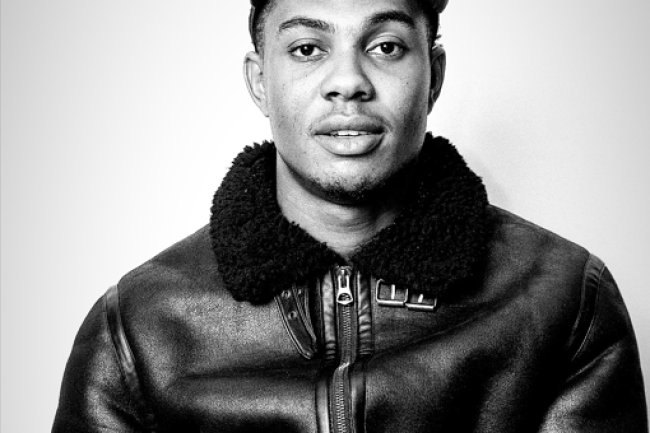
Akinola Davies Jr. grew up between Lagos and London, carrying his father's name and his father's absence. Now, with a BAFTA, a Sundance Grand Jury Prize, and a historic Cannes selection to his name, he is the most important new filmmaker you need to know. The post Akinola Davies Jr.: The British-Nigerian Filmmaker Rewriting the Rules of African Cinema appeared first on HypeTribe.
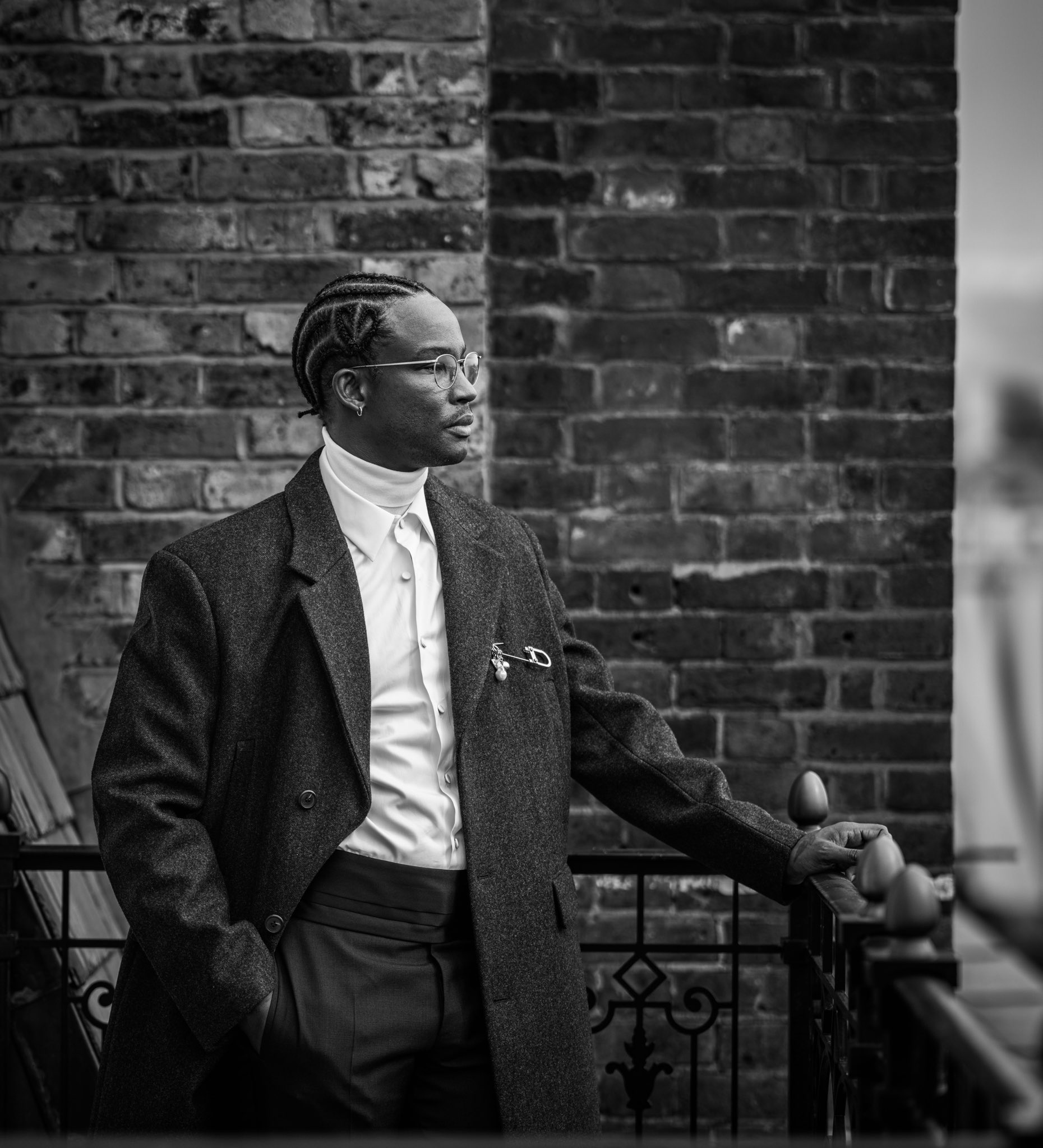


There are storytellers who arrive quietly, build slowly, and then change everything. A proper definition of “moving in silence”, and Akinola Davies Jr. is an embodiment of that.
Over the past five years, the British-Nigerian filmmaker and writer has moved from music video sets and East London club nights to the most prestigious stages in world cinema, collecting a Sundance Grand Jury Prize, a BAFTA, and a historic Cannes selection along the way.
His debut feature, My Father’s Shadow, became the first Nigerian film ever to screen in Cannes’ official Un Certain Regard selection. He is, by every available measure, one of the most significant new African filmmakers in present day.
To understand his films, you have to understand his life. And his life begins, in a rather uncanny way, with an absence.
A Name, a Shadow, and a Life Between Worlds
Akinola Ogunmade-Davies Jr. was born in West London to a Yoruba family. He was three years old when he moved to Lagos, and a teenager when he returned to England for secondary school in Kent. He studied journalism at Brighton University, briefly worked at a publishing house, and then, almost instinctively, found his way toward image-making. He has said that he perhaps subconsciously always wanted to tell stories. The journalism degree, in hindsight, was simply a detour toward that same destination.
But the biographical detail that sits at the heart of everything he has ever made is this: Akinola Davies Jr. was 20 months old when his father, Akinola Davies Sr., died. He grew up carrying his father’s name without ever truly knowing the man behind it. “I’ve always had to live in his shadow because I’m named after him,” he has said. “A lot of my teenage and early 20s, it was just very difficult because I’d heard all these great things about my dad, and I was like, how are you ever going to live up to any of these things?”
That question, which might have consumed a lesser artist, became the engine of his entire creative life. Growing up between Lagos and London also produced its own particular friction. He has described the experience of navigating a dual British-Nigerian identity as distorting, noting that living between both worlds made him feel like an outsider within each of them. It is the kind of displacement that either breaks a person or molds them. For Davies, it molded him into something rare: a filmmaker who belongs fully to two worlds and is therefore free to interrogate both.
From Club Nights to Calling Cards
Before the awards, before Cannes, before any of it, Akinola Davies Jr. spent over a decade building a life in East London that was as culturally rich as it was instructive. He hosted a radio show on NTS under the name Crackstevens. He co-ran PDA, a queer-leaning club night that became legendary in London’s creative underground, with musician Ms Carrie Stacks and casting director and stylist Mischa Notcutt. A typical night at PDA saw Shygirl on the door and Arca on the decks. He assisted the pioneering photographic duo Tim and Barry. He shot music videos, initially self-financed, and gradually built a commercial career that took him to Gucci, Telfar, Kenzo, Mulberry, and Louis Vuitton, while directing videos for artists including Kae Tempest, Blood Orange, Neneh Cherry, and Kokoroko.
It was a genuinely brilliant decade, creatively speaking. But it was also, in hindsight, a long apprenticeship in visual language. His cinematographer on his breakthrough short film, Shabier Kirchner, offered him a piece of advice that reoriented his entire approach to the camera. “In film, that’s the only trick you’ve got,” Kirchner told him. “When you move it, it has to have meaning behind it.” Davies has cited that note as transformative. The man who had built a career on the energy and instinct of music video filmmaking began, deliberately and patiently, learning to slow down.
Lizard: Nigeria’s First Sundance Grand Jury Prize Winner
In 2020, Akinola Davies Jr. alongside his brother, Wale, made Lizard, an 18-minute short film backed by BBC Film and produced by Rachel Dargavel. The film was rooted in personal memory. “We got robbed at gunpoint on the way from church when me and my brother and cousins were really young,” he has said. “The memory of that has always been in my mind. That was something we never spoke about.” Rather than dramatize the event literally, he chose to move through it with a fantastical lens. The film follows Juwon, an eight-year-old girl in present-day Nigeria who is expelled from Sunday school after demonstrating an extraordinary ability to sense danger, and who subsequently becomes entangled in criminal activity.
The fantastical element was not an aesthetic flourish but a philosophical position. Davies does not believe there is a meaningful difference between real life and fantasy. He also recognised that children growing up on the continent rarely have access to closure or therapy, and that Lizard was, among other things, an act of retroactive care for his own younger self.
The film screened at the BFI London Film Festival and the Raindance Film Festival. It was the only Nigerian submission at the 2021 Sundance Film Festival. It won the Grand Jury Prize, making it the first Nigerian production in history to receive that honour. It was subsequently nominated for Best Short Film at the 74th BAFTA Film Awards. A filmmaker had arrived.
The Film That Was a Decade in the Making
The story of My Father’s Shadow begins not in a production office but in 2012, when Akinola’s older brother and co-writer, Wale Davies, wrote the first draft of a script drawn from their shared grief. The two brothers had been quietly circling the same subject for more than a decade: the loss of their father, and what it means to spend a childhood in the shadow of a man you never truly knew.
After the success of Lizard, BBC Film head Eva Yates encouraged Davies to make a feature. He initially declined and made Lizard instead. She got her wish eventually. The two brothers returned to that decade-old script and began shaping it into what would become one of the most celebrated debut features in recent British and Nigerian cinema history.
Set on June 12, 1993, the day of Nigeria’s most consequential and most disputed presidential election, the film follows two brothers, eight-year-old Aki and eleven-year-old Remi, as they spend an extraordinary day in Lagos with their often-absent father, Folarin, played with searing precision by Gangs of London Star, Sopé Dìrísù. Davies had first seen Dìrísù on stage as Muhammad Ali in One Night in Miami, and later in Gangs of London and His House. He sent a photograph of him to Wale with a single message: “This could be the guy.” When the casting director joined the production, Dìrísù’s name was at the top of her list too. Some choices are instinctive because they are correct.
The two boys at the centre of the film, Chibuike Marvellous Egbo and Godwin Chiemerie Egbo, are real-life brothers, a casting decision that gives the film an intimacy that simply cannot be manufactured. The film was shot on 16mm, a choice Davies has described as explicitly political. “There’s Nollywood, VHS, the digital era. And now we’re back at 16mm. I want to see Nigerians on the most beautiful format. It’s seductive. It’s inviting.” The film is produced by Element Pictures in association with Crybaby and Fatherland Productions, co-financed by BBC Film and the BFI.
A Yoruba Narrative, a Global Stage
One of the things that makes My Father’s Shadow so formally distinctive is that it does not behave like a conventional Western coming-of-age drama. Davies has been clear that the film’s non-linear structure is not accidental but cultural. “Being Yoruba in the way we made the film has also allowed us to be very intentional about the film not being a linear story, being a film that jumps time and allows you to move and shapeshift,” he has said. He situates himself and his brother in a lineage of African filmmakers including Ousmane Sembène and Mati Diop, filmmakers who have long understood that the continent has its own storytelling grammar, one that does not require Western validation to be legitimate.
The film is equally deliberate about how it handles African fatherhood. Davies has spoken at length about the stoic exterior that African fathers are often expected to maintain, and his commitment to giving that stoicism full context rather than reducing it to a stereotype. “We want everyone to hold a certain type of masculinity accountable, present context and nuance to how that masculinity has to be performed, why it’s performed in that way, and external factors around it,” he has said. “Whatever we do, we don’t want to add to the canon of stereotypical perceptions of what it means to be African or an African man or fatherhood.” The result is a portrait of a father that is neither a condemnation nor an idealisation but something far more difficult and far more truthful: a fully realised human being, seen through the eyes of the sons who needed more of him.
The Awards and their Significance
The recognition that has followed My Father’s Shadow is not merely impressive. It is historically significant. At Cannes 2025, the film received the Special Mention for the Caméra d’Or, making it the first Nigerian film ever to appear in the festival’s official selection. Variety declared that Davies Jr. had announced himself as a major cinematic voice. At the 28th British Independent Film Awards, he won Best Director, with the film leading all nominations at twelve. At the Gotham Independent Film Awards, he took home two prizes: Best Breakthrough Director and Best Lead Performance. At the 2026 BAFTA ceremony, he won the BAFTA Film Award for Outstanding Debut by a British Writer, Director or Producer. The film was also selected as the UK’s submission for Best International Feature Film at the 98th Academy Awards.
Standing on the BAFTA stage alongside his brother and co-writer Wale, Davies wore pins of the Palestinian and Democratic Republic of Congo flags and used his acceptance speech to say something that cut through the pageantry of the evening. “To the economic migrant, the conflict migrant, those under occupation, dictatorship, persecution and those experiencing genocide, you matter and your stories matter more than ever.” He then noted that the award belonged not to him alone but to the broader creative community in London and in Nigeria, the people who work with no praise, no acclaim, and very little resources, and who keep showing up regardless. The BBC edited out a section of his speech during the broadcast. He called it a shame. He said what he had to say regardless.
On Nigeria, Nollywood and the Future
Davies has been thoughtful and generous when asked about the broader ecosystem his work belongs to. He does not position himself outside of Nollywood but within it, describing My Father’s Shadow as part of “the Nollywood family tree in the art house section.” He has spoken about his commitment to developing the skill sets of Nigerian creatives, and about his desire to keep making films set in Nigeria. The response in Nigeria has been overwhelming. “People have really been surprised by the film in a very emotional way,” he has said. “Maybe there was an expectation of it being something stereotypical, but we’ve managed to hit a nerve and encourage people to have generational conversations.”
On what comes next, Davies has confirmed he is working on a documentary that explores similar themes to My Father’s Shadow, described as almost a part B in documentary form, with exciting executive attachments already in place. He has also confirmed a separate documentary project with filmmaker Adam Curtis. He has expressed interest in compelling literary adaptations, particularly if they are set in Nigeria. And he has been clear that whatever he makes next, he intends to make it with his brother.
Why Akinola Davies Jr. is important
There is a version of this story that frames Akinola Davies Jr. purely as a collection of firsts. First Nigerian film at Cannes Un Certain Regard. First Nigerian Sundance Grand Jury Prize winner. Those firsts matter, and they should be named and celebrated. But what makes him genuinely important is not the door he opened but what he walked through it carrying: a visual language that is rigorously cinematic, a story that is deeply personal yet universally resonant, and a philosophical commitment to African narratives told on their own terms, in their own grammar, at the highest possible standard of craft.
He spent a decade in East London learning how images work. He spent a lifetime living with an absence that could not be filled. He made something extraordinary out of both. At roughly 40 years old, Akinola Davies Jr. is only just beginning, and that is perhaps the most exciting thing of all.
The post Akinola Davies Jr.: The British-Nigerian Filmmaker Rewriting the Rules of African Cinema appeared first on HypeTribe.
What's Your Reaction?